Glossary of Botanical
Terms
Used On This Web Site
A
B C D E F G H I J K L M N O P Q R S T U V W X Y Z
Select the first letter of the word from the list above to
jump to appropriate section of the glossary. If the term you are looking for starts with a
digit or symbol, choose the '#' link.
- A -
achene
A hard, dry, one-chambered, one-seeded
indehiscent fruit.
The fruit wall is not joined with the seed coat. Example: spinach and sunflower.
agriculture
The
science, art, or occupation concerned with cultivating land, raising
crops, and feeding, breeding, and raising livestock; farming.
All-America Selections®
(AAS)

All-America Selections tests and
introduces
AAS Winners each year. Many people ask, who determines an
AAS Winner? The answer is the independent AAS Judges determine the
AAS Winners
by judging and scoring the entries. The Judges score each entry from 0 to
5 points, with 5 being the highest. Judges report their scores each fall. AAS uses an independent accounting firm to calculate the average score of
each entry. Only the entry with the highest average score is considered
for a possible
AAS Award. The AAS Judges determine which, if any, new
unsold entries have proven superior qualities to be introduced as
AAS
Winners.
What qualities will Judges score? Judges
look for significantly improved qualities such as earliness to bloom or
harvest, disease or pest tolerance, novel colors or flavors, novel flower
forms, total yield, length of flowering or harvest and overall
performance. In the last ten years an entry needs to have at least two
significantly improved qualities to be considered by Judges for an
AAS Award.
The AAS Winners offer gardeners reliable,
new varieties that have proven their superior performance in Trial Grounds
across North America.
To purchase seeds for heritage AAS winners,
click here. For more information, visit the AAS
website at:
www.all-americaselections.org
angiosperm
A plant whose seeds are formed within a fruit. Angiosperms, or flowering plants, are the dominant plants in the world today. Virtually all crop plants are of this plant class.
annual
A plant that completes it life cycle,
from seed to seed, in one growing season.
anther
The saclike structure,
that is the part of the stamen (male reproductive
part), in which pollen is formed in a flower.
asexual reproduction
The process of producing new individuals by vegetative
propagation -- for example, using cuttings. All offspring are clones or
genetically identical to the parent plant.
awn / awning
In botany, an
awn is either a hair-like or bristle-like appendage on a larger structure.
These are common in plants in the grass family often giving them a hairy
appearance. Awns can be short, several centimeters long, straight, or
curved, single or multiple per floret.
- B -
Bean Common Mosaic Virus (BCMV)
Bean common
mosaic virus (BCMV) and Bean common mosaic necrosis virus (BCMNV) are
species within the genus Potyvirus, family Potyviridae and cause some of
the most economically important diseases of legume crops worldwide. Both
viruses occur essentially wherever bean and cowpea (including Phaseolus,
Vicia, Vigna), lupin (Lupinus), pea (Pisum), peanut (Arachis), and soybean
(Glycine) are grown; are transmitted by aphids in a non-persistent manner,
and also seed-transmitted. Isolates of BCMV and BCMNV can be
differentiated into ten pathotypes based on their reactions on
differential bean cultivars.
berry
Fruit with soft flesh surrounding one or more seeds.
biodiversity
Biodiversity is a commonly used abbreviation
of the two words, "biological" and
"diversity". It simply refers to the diversity, or
variety, of plants and other living things in a particular area, region,
or the planet as a whole system.
For many reasons, biodiversity on our planet is threatened. One of the biggest contributors to loss of cultivated plant variety loss is the consolidation and mergers within the mainstream seed industry. For more information, refer to the ETC Group's papers entitled, "Global Seed Industry Concentration - 2005" and "Oligopoly, Inc. 2005."
biennial
A plant that completes its life cycle in two years.
Generally, in the first year, growth occurs followed by flowering, fruiting
and seed production in the
second year.
binomial
The two-part scientific name consisting of a genus name and
a species, cultivar, group, series, or hybrid epithet, denoting an individual within a
genus.
blanch
From the
Old French word blanchir, to whiten. As a gardening term,
it is used to describe a process of excluding light so as to make the
plant material lighter in color and more tender. For example, this
is commonly done with endive.
blight
See "Late
Blight."
bolt
An Old
English word for arrow, to bolt is a verb used to describe a plant
prematurely producing seed.
- C -
Carpel
A floral leaf bearing ovules along the margins.
Cold
Stratification
Many herbs and other perennial plants require this extra
"conditioning" or "stratification" step. Cold
stratification or conditioning is simply a method of letting the seeds
know that it is time to wake up. There are many methods for accomplishing this.
Method 1 - Some people simply sow the seeds into flats outdoors while the weather is still cold and allow them to
wake up naturally.
Method 2 - Stratifying seeds on paper towels saves a lot of space and gets the job done. Lay one sheet of paper towel down flat, lightly moisten with water and sow the seeds about 1" apart. Put a dry paper towel on top and dampen it. Roll it up like a jelly roll and put it in a labeled Ziploc bag.
After the prescribed time for the particular seed type, carefully pick up the seeds with tweezers or the tip of a sharp knife and sow the seed in a seed starting soil mix.
If some seedlings stick to the paper towel, gently tear the paper towel around the seedling, leaving it attached when planting.
Method 3 - Mix the seeds with damp, sterile
peat in a plastic bag and place them into the refrigerator. The time
required is greatly dependant on the seed type. (This also works best with larger seeds.) Once this is done, sprinkle the
mixture on top of pots that you have filled with sterile, pre-moistened
potting mix and place in a warm location (on top of the refrigerator). Keep
moist until germination occur and treat as you would any other seed you
are germinating in pots.
See also Wikipedia - Stratification.
Certified Naturally Grown (CNG)
The
Certified
Naturally Grown™ (CNG) label is a non-profit
alternative eco-labeling program for small farms that grow using USDA
Organic methods but are NOT a part of the
USDA Certified Organic program.
cultivar
A variety
of plant that has been produced and maintained through
cultivation. Not a wild variety. A word from the combination
of the two words, "cultivated variety".
- D -
Damping-off
A single, collective term used to
describe underground, soil line, or crown rots of seedlings due to unknown
causes. Many soil borne diseases and fungi can cause these symptoms of
sudden plant death. Click here
for a more thorough discussion of the description, causes and controls.
Days to Maturity
This common plant variety descriptor is used in agriculture. This number
is fairly subjective, varies from location to location and even from year
to year. It is intended to be used for garden planning purposes, but by no
means is ever to be an exact date. Nature, by her very nature, is never
exact.
When reading through catalogs and website's plants the days to maturity
number for plants direct sown from seeds will be an appoximate number of
days from seedling emergence to first harvest.
For plants that are started indoors and then transplanted lated, for
example, tomatoes, peppers, and eggplants, the number of days is from
transplant until the first ripe fruits.
Generally, the main harvest occurs days to weeks later, depending on the
plant species and what part of the plant is harvest and used.
To reiterate, these number are very approximate and to be used for rough
planning purposes only!
Determinate
In the context
of our web site, this word is primarily used in reference to tomato
categories. Determinate refers to the growing habit of plants that
are bushy, grow to a specific point, set fruit all at once, ripen over a
short, two to four week period, and are done. They generally do not need staking
although caging is usually recommended.
When this
trait was first observed and further developed in the early 20th Century,
the term used was "self-topper." That is, the plants did not require
"topping" or pruning as commercial growers were accustomed to doing with
their
indeterminate or vining tomatoes.
In the broader
sense, the word determinate is used to describe a growth habit of any
species that fits this general definition. Modern bush beans
developed for mechanical harvesting, for example,
are determinate in habit.
As a subset of
determinate is a semi-determinate
growth habit. In beans, this is commonly referred to a "half-runner"
type beans. Plants with this growth habit are usually short, compact
bushes and meet the main definition of being determinate, but along with
producing a primary main crop, they will usually produce short runners and
depending on the location, additional fruit.
See also
indeterminate.
Dwarf tomato (Historically called "tree-type.")
Indeterminate,
determinate, and dwarf are
the three major categories of tomato growth habits. There is much
variability within the dwarfs, but it is subtle and does not seem to be
consistent from season to season, or even region to region.
In general terms, dwarf tomato plants have
very thick main stems with minimal branching. They grow slowly and
primarily vertically. Their foliage can be either regular or potato leaf,
but in either case, are
rugose (e.g. dark green in
color and crinkly in texture).
Dwarf tomatoes, formerly quite obscure, are
actually very old. In fact, dwarf-type tomato varieties date back to at
least the 1850s when they were referred to as "tree-type" plants.
For reference,
determinate tomato
varieties didn't appear until about the 1920s.
In regards to dwarf tomatoes, think of the
joy that
indeterminate tomatoes
offer - their diversity of color, sizes, and flavors - but without all of
the work associated with the tall, vining plant growth habit which always
presents challenges to gardeners - supporting, pruning, etc.
Dwarfs are actually like
indeterminates in their
diversity and potentially excellent flavors, but they do not require
pruning since they grow at approximately half of the vertical rate when
compared to
indeterminate plants. For
example, instead of growing an eight foot tall 'Cherokee
Purple' tomato, gardeners can choose to grow 'Rosella
Purple', that bear similar flavored fruit gradually throughout the
season, just like
indeterminates, but
require less work and top out at about four feet in height.
All of our dwarf varieties are essentially
indeterminate in fruiting
style, that is, they will produce fruit until killed by frost or disease,
but they grow vertically at only half of the rate, so they are easier to
deal with.
Click here for dwarf tomato varieties at the Victory Seed Company.
" . . . the tomato De
Laye, often called Tree tomato. This originated about 1862 in a garden at
Chateau de Laye, France. In this the plant rarely exceeds eighteen inches in
height, is single-stemmed or with few very short branches, the nodes very
short, the fruit clusters few and small. From this, by crossing with
other types, there has been developed a distinct class of dwarf tomatoes
which are of intermediate form and character and are well represented by
'Dwarf Champion'.[1]
- E -
embryo
Rudimentary plant within the seed.
- F -
F1 - F1 Hybrid
First
generation resulting from a cross mating of distinctly different parental
types. F2, F3, F4, etc. are annotations for subsequent generations.
Foundation Seed
Primary source of seed of a genetically identified
variety from which all increases are made.
Forcing
"Forcing" is an old agricultural term for
the practice of raising produce outside of their normal, biological
timing. This has historically been achieved in cellars, heated buildings,
greenhouses, cold frames or under other artificial growing conditions. For
obvious reasons, it is probably the most labor intensive form of
production and falls in and out of favor as markets demand.
Once quite popular among regional growers,
the out-of-season produce would command high prices making the expense of
labor and facilities profitable. However with the adoption of
international, large scale food production and the shipping industry,
all-season produce availability is no longer rare or a novelty.
fruit
A fruit is a ripened ovary of a plant along with any
attached parts that developed with it from the flower.
full sun
Click here for the definition.
- G -
gene
A group of base pairs in the DNA molecule that determines
one or more hereditary characters.
genetic drift
The phenomenon
of genetic traits or characteristics unintentionally or accidentally
transferring from one population to another.
In the context
of our website, it is generally used to imply the catastrophic corruption
of natural varieties with human created, genetically modified organisms. This contamination is an irreversible action that is akin to biological
pollution.
genetic engineering
Genetic engineering involves laboratory techniques
to change the DNA of living organisms. See this great explanation at the Mother's for Natural Law Web site.
Germ
In botanical terms, the germ is the earliest
form of an organism; a seed, bud, or spore. That is, it is the
reproductive part of a seed — the embryo — that grows into a plant.
glaucous
Adjective to describe a plant or fruit that are covered in a grayish, whitish, or bluish waxy or
powdery substance. From the Greek, glaukos and Latin,
glaucus meaning "blue-gray, green."
GMO
An abbreviation for Genetically Modified Organism. Refer to genetic engineering.
Genetically
modified organisms (GMO), or more correctly, Genetically Engineered
Organisms (GEO), provide a class of legal ownership protection and
ultimately exist to create profit for their owners. It is our personal
feeling that the risks of using these altered varieties far outweigh any
possible benefits. We have vowed to protect and promote open-pollinated
and heirloom seeds.
Since the 1980s and the boom of the "biotech era," the goal of the
mainstream seed industry, is to force growers to purchase new seed every
year. They hope to break thousands of years of the agricultural practice
of farmers saving seed. Their "holy grail" to force this issue is known as
Terminator Technology. (see Terminator gene
article)
- H -
harden off (hardening)
The
straightforward process of gradually acclimating a tender seedling,
germinated and nurtured under artificial conditions, for life in the wilds
of the garden. For most tender plants (tomatoes, peppers, etc.),
hardening off for two weeks is desirable.
Examine your garden on a frosty morning
searching for areas that are relatively free from frost. For the
first week, place your plants outside during the warmest part of the
day. Initially limit their exposure, bringing them back indoors
and under cover, after a few hours.
During the second week, gradually
extend the amount of time you leave them outside, bringing them back in
during the evening. By the end of the second week, assuming that
there is no longer any threat of frost, your plants should be ready for
transplanting into the garden.
heirloom seed (aka heritage seed)
The definition does vary from person to
person, company to company. It has become a very popular or trendy marketing term. The Victory Seed Company adheres to the
purest form of the definition. That is, an heirloom plant variety
is one that has been valued by a family, tenderly and carefully preserved, and handed along from generation to
generation. For more information, click here.
We also concede that there are some
"heirlooms" whose origins were as a commercial
release. That is, they were introduced by a seed
company or seedsman. These
old "commercial heirlooms"
have value and are worthy of protection.
At a minimum,
an heirloom variety must be, open-pollinated seed,
not an unstable hybrid, and certainly not genetically
modified!
The oldest reference we have been able
to find using the word "heirloom" as an adjective for seeds, plants and
bulbs is on page 30 of the book entitled, Pioneer American Gardening,
compiled by Elvnia Slosson, copyright 1951, Published by Coward-McCann,
Inc., New York.
humus
From the Latin
word for earth or ground, humus is the organic matter in quality soil. The reason we work compost into our soil is to increase the humus level
which improves the quality and health of the soil.
horticulture
The science
and art of the cultivation of a field crops, a garden, orchard, or
nursery; the cultivation of flowers, fruits, vegetables, or ornamental
plants.
hybrid
A plant resulting from
the cross mating of
distinctly different parental types. From the Latin word hybrida
or offspring of a domesticated sow and a wild boar.
In the past, no reputable seedsman would ever release a new variety in an unstable state. It would be bred and selected for years until it would come true-to-type from saved seed.
Starting around WW II, the definition of the term has changed in its implication and application. Most seed companies are now highly motivated by profit and so they intentionally release unstable, F1 hybrids whose exact parentage are guarded trade secrets. If a gardener save seeds, their resulting crops will not be true-to-type and will exhibit various traits from its parents.
Since the beginning of the Biotech-era, GMOs are rapidly gaining inroads into the marketplace.
- I -
indehiscent
Not splitting open when ripe.
Indeterminate
Like
determinate. this word is primarily used in
reference to tomato categories on our web site. Indeterminate tomatoes continue to grow,
set fruit, and ripen continuously
until death - usually due to disease or frost conditions. Also known as vining types, they require staking or other support.
In the broader
sense, the word indeterminate is used to describe a growth habit of any
species that fits this general definition. Pole, runner or
climbing-type beans an example of an indeterminate plant habit.
See also
determinate.
- J -
-
(empty)
- K -
keeper
A storage
variety.
- L -
late blight
Late blight is caused by the same fungus (Phytophthora infestans)
that caused the famous
Irish potato
famine of the 1840s. All strains are devastating to tomatoes and
potatoes.
The following
may be of help:
-
Locate garden
where it will receive full morning sun.
-
Avoid overhead
watering, especially late in the day. Always water at the soil line. Never
the foliage.
-
Keep foliage
as dry as possible.
-
Allow extra
room between the plants for good air circulation.
-
Destroy
volunteer tomato and potato plants and nightshade family weeds, which may
harbor the fungus.
-
Do not compost
rotten, store-bought potatoes.
-
Pull out and
destroy diseased plants.
leach
The roots
of the word are Old English leccan, to water. The
definition is to dissolve out. For example, heavy rains have
leached the minerals from the soil.
leggy
The tendency
of plants to grow tall, tin and straggly. Typically caused by
inadequate light.
loam
Loam is
soil that is rich, fertile and is whose moisture retention abilities are
balanced. The roots are from the Middle English word lam
which translated means clay.
- M -
Monoecious
Having the
stamens and the pistils in separate flowers on the same plant.
Multigerm (Multi-germ)
Multigerm seeds (see
germ) occur when flowers grow in tight clusters and
become fused together by their petals (such as the flowers on
beet and
chard
plants). This results in seed balls that when planted, may produce one to
five seedlings.
- N -
Nostalgia
Remembering history the way it should have been. The "Good
Ol' Days" syndrome.
- O -
olericulture
The
cultivation of vegetables for the home or market.
- open-pollinated seed
A seed which produces offspring just like the parent plants.
Open-pollinated seed allows growers to harvest and save seed for the
following year.
Click here for more information.
-
Open
Source Seed Initiative (OSSI)
Since our founding, the Victory Seed Company has only offered seeds that
were not only rare, open-pollinated, and primarily heritage or heirloom
varieties, but ones that our supporters (customers) are encouraged to
propagate and save seeds from. We do not offer patented, licensed or
PVP protected varieties.
As a mission-driven organization, and not a fiscally motivated company,
public domain seeds are at the core of our values. Sadly, we live in
a world where corporations and governments work to control seeds. The Open Source Seed Initiative was founded in 2012 to protect the ability
to share seeds.
The OSSI Pledge - http://osseeds.org
- "You have the freedom to use these OSSI-Pledged seeds in any way
you choose. In return, you pledge not to restrict others' use of these
seeds or their derivatives by patents or other means, and to include this
Pledge with any transfer of these seeds or their derivatives."

For a list of the OSSI
seeds currently available from Victory Seeds®,
please click here.
Organic
The term
organic as a descriptor of gardening practices dates back to the early
1940s. The term, "organic farming" was first used in a 1940
publication, "Look
to the Land", by Lord Northbourne. Then in 1942, J. I.
Rodale founded "Organic Gardening and Farming" magazine and used the word
"organic" to describe the "natural method of gardening and farming".
It should be
noted that prior to about World War II, what we all now call organic
gardening and farming was simply the standard horticultural principles
practiced for centuries.
Organic, is
now a marketing term "owned" by the Federal government. That is, if
you are located in the United States and want to sell something that you
grow organically, and call is organic, you fall under the standards of the
U.S. government.
Organic,
Certified
Certified Organic
refers to products grown under guidelines as
mandated by the National
Standards on Organic Agriculture. To become certified, growers
and processors must
keep very detailed records, adhere to the standards, have soil and
facilities tested,
keep copious records, and pay certification fees and duties (effectively
taxes). Examples of organizations
who perform these certifications are OCIA, Oregon
Tilth, California
Certified Organic Farmers, and the Northeast
Organic Farming Association.
Organically
Grown
Many small growers are strict
and responsible gardeners but either cannot afford the fees associated with
the USDA's certification process or take issues with the standards. Some believe that
the USDA, who has affectively taken legal ownership over the use of the
word organic as applied to marketing, is not strict enough.
Since the
work of many small growers is a labor of love, there is an exemption
set in the national standard allowing a product to be labeled as
"Organically Grown" if the grower meets the same
requirements and does not have total gross organic sales of over $5,000
annually.
|
"'Organic'
is now dead as a meaningful synonym for the highest quality food.
Responsible growers need to identify not only that our food is grown to
higher, more considered standards, but also that it is much fresher
because it is grown right where it is sold."
|
In order
for us to sell seed labeled as organic, we would be required to become a
certified organic handler. This of course comes at a cost and at
this time - a cost which is prohibitive to us.
Note: If you are a certified organic grower, you can still purchase seed from
us as much of the varieties we offer are rare and not available
elsewhere and all of our seed is chemically untreated. Refer to
section 205.204, entitled "Seeds and planting stock practice
standard" in the
National Organic Standard. Much like the
original grassroots efforts of the organic movement of decades ago,
there are alternatives cropping up. One such alternative is the
Certified Naturally Grown™ label. It
is a non-profit alternative eco-labeling program for small farms that
grow using USDA Organic methods but are NOT a part of the USDA Certified
Organic program.
Overseed
When a seed
has quality problems such as suspected low germination rates or physical
damage, a farmer of gardener may choose to over seed. That is, plant
denser than the normal seed spacing. This is intended to compensate
for bad seeds and still result in a good stand of plants.
- P -
Panicle
A loose,
branching cluster of flowers, as seen in millet and oats.
partial shade
Click here for the definition.
partial sun
Click here for the definition.
parthenocarpic
In botany and
horticulture, parthenocarpy (literally meaning virgin fruit) is the
natural or artificially induced production of fruit without fertilization
of ovules. In simple English, this means that fruit develops from a flower
that was not pollinated and that the resulting fruit is therefore
seedless.
For the
context of Victory Seeds®,
we offer one of the largest collections of parthenocarpic tomato
varieties available in one place. Most all of them were bred at Oregon State University for colder, shorter growing
seasons and can often produce ripe fruits two weeks earlier than other
varieties planted in the garden.
Although the
first fruits on the plants will effectively be seedless, once the weather
warms up, the later fruit resulting from pollinated flowers will contain
seeds. Keep this in mind when seed saving!
NOTE: The
parthenocarpic trait in tomatoes is naturally occurring and not the
result of genetic engineering. It has been bred into the
open-pollinated varieties that we
offer here.
perennial
A plant that lives from year to year and
typically involves many reproductive cycles. By definition, for
three seasons or more. From the Latin word perennis,
"through the year".
perfect flowers
This term
refers to plant types whose flowers contain both male (stamen)
and female (pistil) structures and whose pollen is
self-compatible (See also self-incompatible).
pistil
The seed-bearing organ of the flower, composed of stigma,
style, and ovary.
plant regulators
Synthetic compounds that induce growth responses in plants.
Also known as "growth regulators."
pollen
Tiny (often microscopic) bodies that are borne in the
anthers of flowers and contains the male generative cells.
- Q -
-
(empty)
- R -
- resistance
The ability of plants to suppress or retard the activities
of a specified pest or pathogen. Also, the ability of plants to withstand a specific
environmental or chemical stress.
rhizome
Rhizomes
are underground, horizontal stems that produce shoots and roots. From the Greek word rhiza, root.
rugose
Wrinkled or
crinkled,
usually covered with wrinkles, the venation seeming impressed into the
surface.
- S -
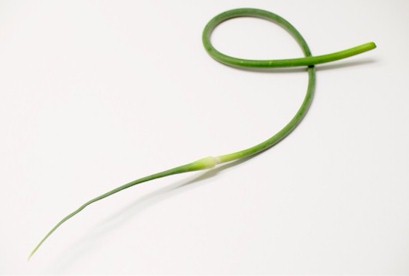
scape
In common
terminology, a scape is a smooth stem that comes out of the ground, has
no branches or normal leaves, and that holds flowers. Garlic,
onions,
chives and Amaryllis are examples of plants with these
structures.
scarify (scarification)
In plant types
that have hard seed coats, germination can take months to years to
naturally occur.
Texas
Bluebonnets are an example of this. To promote fast
germination, growers scarify the seed coat.
Scarification
is the manual scratching or nicking of the seed coat as a means of
simulate the natural weathering process. Once scarified, most seed
will germinate quickly and should be kept watered until germination occurs
and plants become established. There are three common methods used
for scarification:
-
Physically nick the seeds with a
knife.
-
Rub the seeds with fine sandpaper.
-
Freeze the seeds overnight then then
quickly pour boiling water over the seeds and allow to soak at room
temperature for several hours prior to planting.
The key is to experiment and find out
what works best for you and for the seed variety you are working with.
seedbank
There are
other definitions, but in the context of the mission of the Victory Seed
Company, a seedbank (also called a seed bank, seed vault, gene bank, or
plant bank) is the collection of seeds
specially prepared for long-term storage.
The reasons
for developing and maintaining a seedbank varies by individual or
organization. We work to help protect as many of the useful plants
that have been developed over centuries but that have now become rare or
are no longer available from commercial sources.
Storing seeds
helps to guard against catastrophic events like natural disasters,
outbreaks of disease, war, or corporate consolidations. Unlike seed
libraries or seed swaps that encourage frequent reuse and sharing of
seeds, seedbanks are not typically open to the public.
self-incompatibility
Self-incompatibility, when referring to
pollination, refers to plants who are unable to pollinate their own
flowers. That is, two or more plants of the particular variety are
required for pollination to occur and fruits to develop.
sport
A
phenomenon whereby a spontaneous mutation occurs within an otherwise
stable plant variety. It is caused by a genetic mutation and not
as a result of cross pollination.
stamen
The stamen
(plural stamina or stamens) is the male or pollen producing reproductive
organ of a flower. Stamens typically consist of a stalk called the
filament, and an anther.
statification
Stratification
is the process of pretreating seeds to simulate a natural winter cycle
that a seed must endure before germinatng. Many seed species undergo an
embryonic dormancy phase, and generally will not sprout until this
dormancy is broken. The time taken to stratify seeds depends on species
and conditions.
sucker
The
unwanted shoots from the stem or roots that draw nutrients and sap the
plants fruiting and flowering ability.
sunlight requirement definitions
Full Sun: This
term refers to a location that receives at least six or more cumulative
hours of direct sunlight per day. That is, the period does not need to be
continuous, but it does need to be direct, full sun. For example, a
portion of you yard might receive four hours of full sun in the morning
but the house next door shades the garden for several hours with the full
intensity of the sunlight returning to the spot for four more hours in the
afternoon. In this example, that location is said to receive eight hours
of direct full sun per day.
Partial Sun:
Although you might think that this refers to a shady location, this is not
the case. Locations that receive four to six hours of direct sunlight is
said to be partially sunny locations. The rest of the day these areas are
not in the dark but instead may receive filtered or indirect light.
Partial Shade:
Similar to "partial sun," partial shade means that the amount of sun is
more shaded receiving only two to four hours of direct sunlight per day.
The north side of your house, under trees, or north facing hill slopes are
examples of these areas.
Shade: By simple
definition, shady areas are those that completely lack direct sunlight. In
gardening terms this means, any location receiving less than two hours of
direct sunlight in a day is considered to be shady.
susceptibility
The inability of plants to restrict the activities of a
specified pest or pathogen. Also, the inability to withstand a specific environmental or
chemical stress.
sustainable agriculture
"A sustainable agriculture must be economically
viable, socially responsible, and ecologically sound. The economic, social, and ecological
are interrelated, and all are essential to sustainability. An agriculture that uses up or
degrades its natural resource base, or pollutes the natural environment, eventually will
lost its ability to produce. It’s not sustainable. An agriculture that isn’t
profitable, at least over time, will not allow its farmers to stay in business. It’s
not sustainable. An agriculture that fails to meet the needs of society, as producers and
citizens as well as consumers, will not be sustained by society. It’s not
sustainable. A sustainable agriculture must be all three – ecologically sound,
economically viable, and socially responsible. And the three must be in harmony." -- Dr. John E. Ikerd,
Extension Professor, University of Missouri
- T -
Tiller (in maize / corn)
Corn tillers,
sometimes incorrectly refered to as "suckers," are a normal part of maize
plant physiology.
Except for
cases where tillers appear due to damage to the main growing stalk, the
appearance of tillers generally indicate that the plants are happy and
growing under favorable conditions.
Since they do
not “suck” nutrients from the plant, and usually produce extra bonus
ears, they do not need to be removed.
As a matter of
fact, removing the tillers can make the plant susceptible to insect and
disease attacks.
tolerance
The ability of plants to endure a specified pest, pathogen,
environmental pressure or chemical stress. A tolerant variety will sustain less damage
than a susceptible variety when grown under the same conditions.
Tree-type Tomatoes
-
(Refer
to "Dwarf")
- U -
-
(empty)
- V -
variegated
Having streaks or spots of different
colors; as variegated ivy.
viable:
Capable of growing or developing into a
healthy plant.
Veteran:
As an American-based organization that also
happens to have been founded by someone who served, we use the
following as a guide for who is to be considered a veteran.
"A veteran —
whether enlisted, commissioned, active duty, honorably discharged, retired,
National Guard or Reserve — is someone who at one point in their life,
swore
a lifelong oath, one with no expiration date, effectively writing a blank check made payable to the United
States of America for an amount, up to and including, their very life!"
As a reminder, here are those oaths:
|
Oath of Enlistment
I, (NAME), do solemnly
swear (or affirm) that I will support and defend the Constitution of the
United States against all enemies, foreign and domestic; that I will bear
true faith and allegiance to the same; and that I will obey the orders of
the President of the United States and the orders of the officers appointed
over me, according to regulations and the Uniform Code of Military Justice.
So help me God.
|
|
Officers Oath
I, [name], do solemnly
swear (or affirm) that I will support and defend the Constitution of the
United States against all enemies, foreign and domestic; that I will bear
true faith and allegiance to the same; that I take this obligation freely,
without any mental reservation or purpose of evasion; and that I will well
and faithfully discharge the duties of the office on which I am about to
enter. So help me God.
|
When our very way of life seems to be
threatened and attacked from multiple fronts, the oath to "support and
defend" the Constitution, the foundation of our nation, is today as
important as when it was penned.
"Those who expect to reap the blessings of
freedom must, like men, undergo the fatigue of supporting it.”
Thomas Paine
Victory Garden
"A wartime vegetable garden developed to
increase food production esp. By home gardeners." --Webster’s. See our site
dedicated to
W.W. II-era Victory Gardening
in America.
Back to Top
- W -
(empty)
Back to Top
- X -
(empty)
Back to Top
- Y -
(empty)
Back to Top
- Z -
(empty)
Back to Top
|

